



Filming in China
FILMING IN CHINA
Filming in Beijing, Shanghai and China with NEEDaFIXER — the honest guide
Let’s start with the honest version, because filming in China is not like filming almost anywhere else. There is no walk-up permit office, no self-serve system for foreign crews, and no legal route to an independent foreign shoot in mainland China. Every foreign project — feature film, documentary, TV series, commercial or corporate video — needs the approval of the relevant Chinese authorities, and that approval always runs through an accredited local partner. Content review applies, certain regions and topics are off the table, and timelines are longer than most producers expect.
And yet international productions shoot in China every year, from global brand campaigns on the Shanghai Bund to feature films inside the Forbidden City. The difference between the productions that succeed and the ones that stall is almost always the same: careful preparation, a realistic script, and a local partner who knows how the approval system actually works. NEEDaFIXER supports producers with exactly that — honest feasibility advice first, then fixers, line producing, permits, film crews and equipment once the project is genuinely viable.
Why Film in the People’s Republic: East Asia’s Biggest Backdrop
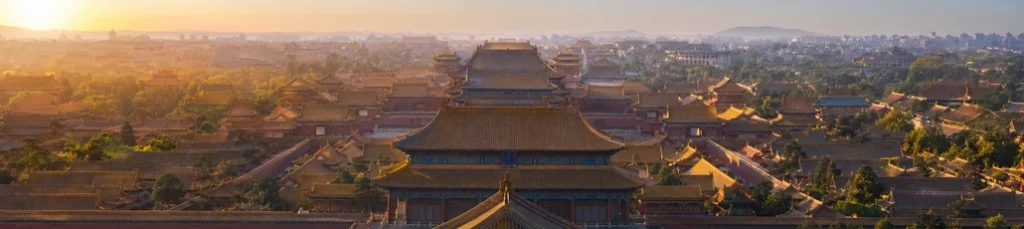
5,000 years of imperial architecture.
Nowhere else in East Asia puts imperial palaces, temples and the Great Wall inside one border — the real thing, not a backlot.
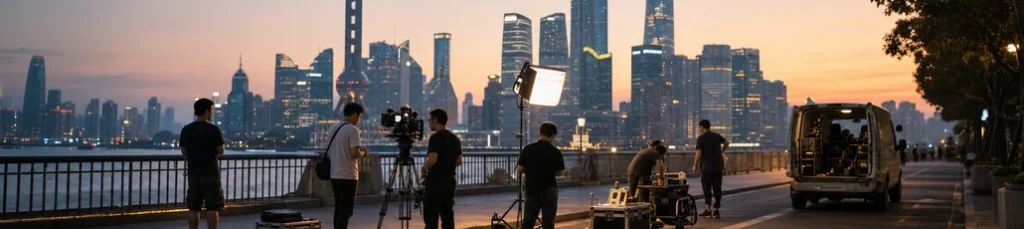
Hyper-modern megacities.
The Pudong skyline, the Shanghai Bund and dozens of skylines no set can fake, for commercials, sci-fi and brand campaigns.
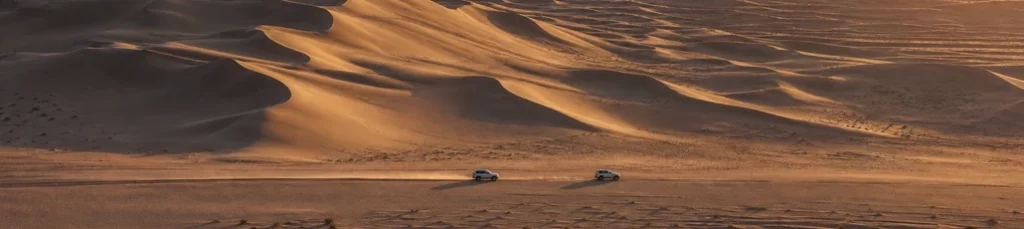
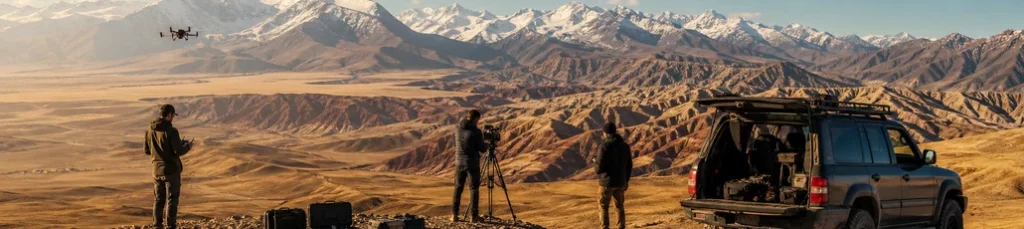
Every landscape at scale.
Deserts, rainforests, sandstone mountains and grasslands, from the Gobi to the karst pillars of Hunan.
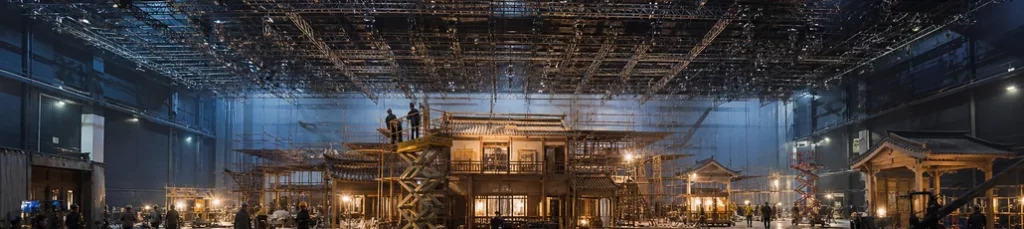
Deep studio infrastructure.
The world’s largest studio complexes and standing sets, serious set-construction capability and modern rental houses in the big production cities.
A doubling option when access is hard.
Where full access isn’t realistic, plate shoots and doubling are legitimate tools — we advise on that trade-off honestly.
Key Locations for Filming in China
BEIJING
The Forbidden City, Tiananmen Square, the Temple of Heaven and the hutong alleyways. Anything with political optics sits at the most restricted end of the permit spectrum — each landmark needs its own approval, and some are effectively unavailable to overseas crews.
THE GREAT WALL
Sections such as Mutianyu and Jinshanling, within reach of Beijing, are proven filming locations — The Karate Kid (2010) staged its training scenes on Tower 14 at Mutianyu. Fees and visitor management vary section by section.
SHANGHAI
China’s commercial face: the Pudong skyline, the colonial-era Bund and the plane-tree streets of the former French Concession — the default Chinese city for commercials and brand campaigns.
ZHANGJIAJIE
Three thousand quartz-sandstone pillars in Hunan — the landscape that famously inspired Avatar and its floating Hallelujah Mountains, one column even renamed “Avatar Hallelujah Mountain” in 2010.
THE SOUTHWEST & DESERTS
Yunnan’s Himalayan foothills and Tiger Leaping Gorge; the Wulong karst bridges seen in Transformers: Age of Extinction; and the Gobi, Dunhuang dunes and Inner Mongolian grasslands (parts of the far west are politically restricted).
HENGDIAN & QINGDAO STUDIOS
Hengdian World Studios in Zhejiang is the largest outdoor studio complex on Earth; Qingdao’s Oriental Movie Metropolis offers modern soundstages, used by the biggest US–China co-production to date, The Great Wall (2016).
Interested in our work? Browse our portfolio to see the exceptional productions we’ve delivered for clients around the world.

Permits and the China Film Administration: How Approval Really Works
Film production in China is regulated at national level by the China Film Administration, with day-to-day control through provincial film bureaus, local authorities and, for anything involving a foreign partner, the China Film Co-Production Corporation (CFCC). The practical consequences for foreign crews:
- No independent foreign shoots. Feature films and TV series require an approved Chinese co-production or production-assistance arrangement; scripts (in Chinese) are submitted for review before production, and the finished film is reviewed again before release in China.
- Documentary and factual content runs through a different channel — foreign affairs offices and, for news crews, journalist (J) visa accreditation. A documentary crew filming on tourist visas is working illegally.
- Commercials, corporate video and photography are the most workable category, handled through an accredited local production company as applicant of record, permit by permit and city by city.
- Content review is real. Scripts touching politics, religion, the military, recent history or territorial questions will be rejected or rewritten — an experienced fixer tells you before you submit, not after.
- Restricted areas. Tibet requires special travel permits plus foreign-affairs approval for any filming; Xinjiang is effectively closed to foreign filming; border and military zones are excluded outright.
Processing time: how long approvals take
Allow three to six months of pre-production for an approved feature or TV series; six to twelve weeks for a permitted documentary with foreign-affairs sign-off; and four to eight weeks for a straightforward commercial or corporate production in one or two major cities. Crew visas, documentary accreditation, equipment clearance and location permits each have their own processing time, and none can be reliably compressed at the last minute.
Real International Productions: Films Shot in China
The Last Emperor (1987)
Bernardo Bertolucci’s nine-Oscar epic was the first Western feature authorised by the People’s Republic to shoot inside the Forbidden City — proof that with government cooperation, a foreign production can achieve access that money alone could never buy.
Mission: Impossible III (2006)
The first Hollywood tentpole to make modern China a central setting shot in Shanghai and in the canal town of Xitang in Zhejiang, whose covered waterside walkways host the film’s finale.
Crouching Tiger, Hidden Dragon (2000)
Ang Lee’s Oscar winner stitched together the real country: the village of Hongcun in Anhui, southern bamboo forests and desert sequences out toward the Gobi, plus studio stage work. Its four Academy Awards made Chinese landscapes a global calling card.
Transformers: Age of Extinction (2014)
Michael Bay shot at the karst “Three Natural Bridges” in Wulong near Chongqing and used the Tianjin Grand Theatre as a futuristic facility before staging its finale around real Hong Kong landmarks — also a case study in the co-production model’s fine print.
The Great Wall (2016) and the studio route
Zhang Yimou’s Matt Damon-led epic — the biggest US–China co-production ever mounted — shot largely at Qingdao’s Oriental Movie Metropolis. And a useful caution from the other direction: Skyfall’s “Shanghai” used real second-unit plates but shot its interiors in London — proof that plates and doubling are legitimate when full access isn’t realistic.
Equipment, Crews and Co-Productions
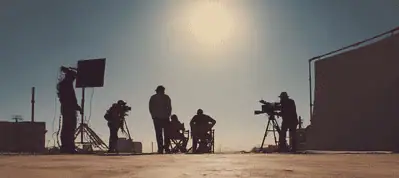
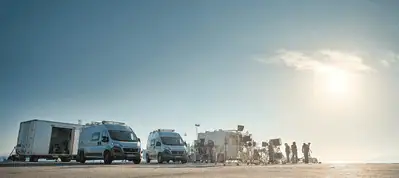
Bringing your own gear: China is an ATA Carnet country, and since 2019 carnets explicitly cover professional filming equipment — but the carnet must be pre-declared through a Chinese customs broker before the equipment lands, with a translated inventory registered electronically, so customs is a pre-production task, not an airport formality. Drones are heavily regulated (CAAC registration, extensive no-fly zones), so plan on a licensed local drone operator; rental houses in Beijing and Shanghai stock current cameras, grip and lighting at international standard.
International crews and your local team: film crews in China are deep in numbers, technically excellent and non-union, with English-speaking department heads in the big cities. The efficient model is a compact overseas creative unit on top of a full local crew; overseas crew on co-productions need employment approval through the Chinese partner, so crew lists lock early. NEEDaFIXER fields vetted bilingual fixers and production support across China, working alongside a Beijing-based company network and Shanghai crews for talent, crew and equipment.
Co-productions and incentives: for theatrical features, the co-production route is the front door. The CFCC examines every Chinese–foreign co-production, and an approved one is treated like a domestic film — bypassing the 34-title import quota and earning the domestic box-office share of around 43% rather than the ~25% imports receive. That commercial arithmetic, not tax relief, is China’s real incentive; the country runs no national cash rebate. Regional, studio-linked incentives do exist — Hengdian has historically waived set-rental fees and Qingdao has operated municipal subsidy schemes tied to its studio zone (confirm current status before you budget).
Corporate Video, Hong Kong and the Bottom Line
Corporate video and commercials are the volume market for foreign filming in China. International agencies shoot car commercials on elevated ring roads, fashion in the French Concession and tech launches against the Pudong skyline; the permit pipeline is well-worn and reliably deliverable inside normal campaign timelines. Corporate video for international clients is similarly routine when permitted correctly, and much of it can be produced remotely — a local director and crew while the client reviews takes live from London or New York.
Hong Kong — the easier door in the same neighbourhood. Hong Kong operates a genuinely different regime: a separate customs territory with no general filming permit required for most street shooting, a fast film office and no script review for commercial work. For a project that needs a Chinese metropolis without mainland approval timelines, it is the pragmatic alternative — see our separate guide to filming in Hong Kong — but every producer weighing up filming in China should price both options side by side.
So — are you allowed to film in China? Yes: with approval, a local partner and enough lead time, foreign productions shoot in China successfully every month. If it touches politics, restricted regions or sensitive topics, we will tell you plainly that the answer is no — and help you find the doubling or plate solution that gets the film made anyway. Filming in China rewards producers who respect the system; it punishes improvisation.
Thinking About Filming in China?
Extraordinary images, on terms set by the system, at a pace set by the approval process — NEEDaFIXER’s job is to make those terms workable: feasibility, permits, fixers, casting, crew and equipment, customs and everything in between. Send us the brief and we’ll give you the honest map from idea to first day of production in China.
"*" indicates required fields