


Italy’s national tax credit returns 40% of eligible Italian spend to international productions, and regional film commissions add locations, permits and local crew on top. NEEDaFIXER provides film production services across Rome, Milan, northern Italy and the south – one contract, one production team, for a shoot that moves between regions.
We are the production service company foreign producers, agencies and brands use for filming in Italy when they need people on the ground: line producers, production managers, English-speaking crew, equipment rental, location scouting, permits and post production. This page explains how permits, the tax credit, crew hire and the north-south split work, how Italy’s production companies are organised, and how our Italian team runs film production services and video production services from prep to delivery.
- Feature films and TV series
- Documentary and factual production
- Commercials, fashion films and branded content for international brands
- Photo production, music videos, corporate video production and live streaming

Which production service company should you use for shooting in Italy?
Italy has hundreds of production companies, from Rome’s feature-film production companies to Milan’s video production companies serving fashion and advertising. For a foreign producer the useful distinction is between a production company that develops and owns its own projects and a production service company that runs your project on the ground: crew, equipment, permits, locations, logistics and the tax credit paperwork, while you keep creative control. NEEDaFIXER is the second kind, and we cover the whole country rather than one city.
Five questions separate a reliable partner from a directory listing:
- Can they crew in more than one region? A Milan-based company will subcontract Sicily. Our production offices and fixers cover Rome, Milan, Turin, Venice, Florence, Naples, Bari and Palermo, so a project that shoots the Dolomites and the Amalfi Coast in the same week has one production manager throughout.
- Do they file permits under their own name? Heritage site permissions and municipal location permissions in Italy are issued to an Italian entity. We apply as the Italian production service company of record.
- Can they claim the tax credit? The Italian tax credit for foreign productions is claimed by the Italian executive producer and passed back to you. We structure the production so the eligible spend is tracked from day one.
- How do they budget? Line-item, in one currency, with crew, equipment rental, travel, per diems and permit fees itemised, and the tax credit shown net.
- Who is with you on set? An English-speaking line producer or production manager every day, not a coordinator on the phone.
Do you need a permit to film in Italy?
Yes for almost everything beyond a handheld camera in a public street. Italy is film-friendly and the permit process is well trodden, but it is local: every comune issues its own permits, heritage locations sit with the Ministry of Culture, and drones sit with the civil aviation authority.
Municipal permits and location permissions
Filming on public land – streets, piazzas, beaches, parks – needs an occupation-of-public-land permit from the comune, plus police or traffic-office coordination for road closures, parking for trucks and night shoots. Rome runs a dedicated film office and Milan, Turin, Florence, Naples and Venice have their own procedures; the regional film commissions help with introductions but do not issue the permits themselves. Private property – villas, hotels, farms, factories – needs the owner’s location release and usually a fee.
Heritage locations, churches and archaeological sites
Italy’s historic architecture is its biggest draw and its most regulated location type for any production. Archaeological sites, museums, state-owned monuments and listed buildings require permission from the Ministry of Culture through the local Soprintendenza, with fees, insurance requirements and conditions on crew size, lighting and equipment. Churches are permitted by the diocese, and the Vatican has its own separate process. These are the permits with the longest lead times, so these permissions are the first thing we file on any period or high end production.
Drone filming and aerial permits in Italy
Drone filming follows the EU drone regulations administered in Italy by ENAC. City centres, airports, military areas and most heritage locations are restricted or no-fly zones, so aerial filming over Rome, Venice or Florence needs a specific authorisation, a licensed operator and, near monuments, the same heritage permission as a ground shoot. In the Alps and on the coast the process is faster, but weather windows and airspace still have to be planned.
How long do filming permits take in Italy?
Municipal permits for a straightforward shoot typically take one to three weeks; heritage site permissions and drone authorisations over cities take longer and should be filed as soon as the locations are locked. We build the lead times into the production schedule and keep alternative locations ready, because in Italy the difference between a permit in hand and a permit “in progress” is a lost shoot day.
Northern Italy vs southern Italy: locations, costs and crew
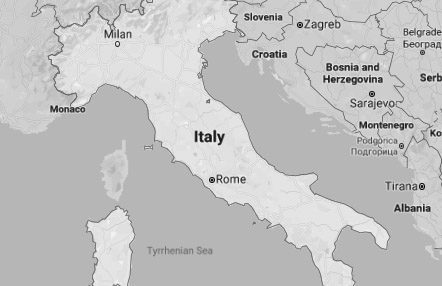
Italy offers two production worlds inside one border, and Italy offers international productions a different crew base, cost profile and location list in each. Northern Italy is the commercial and fashion engine – Milan, Turin, Venice, Lake Como, the Dolomites and the Veneto region – with the country’s biggest advertising crews and the shortest flights from London, Paris and Frankfurt. Southern Italy is the feature-film and travel-look country – Rome, Naples, the Amalfi Coast, Puglia, Matera, Sicily and Sardinia – with Cinecittà and the Rome crew base at its centre.
| Northern Italy | Southern Italy (Rome and south) | |
|---|---|---|
| Signature locations | Milan, Lake Como, Venice and the Veneto region, Turin, the Dolomites and other alpine locations, Cinque Terre, Piedmont vineyards | Rome, Naples, the Amalfi Coast, Puglia and Matera, Sicily, Sardinia, the Tuscan villas between the two |
| Typical work | Commercials, fashion campaigns, photo production, branded content, luxury and automotive | Feature films, TV series, documentary, travel and hospitality, high end productions |
| Crew base | Milan and Turin: advertising and fashion crews, art directors, stylists and agency-facing producers | Rome: feature-film crews, camera operators, assistant directors, Cinecittà studios and stages |
| Studios and rental | Milan studios for fashion and stills; equipment rental houses in Milan | Cinecittà and the Rome rental houses; sound stages for large sets |
| Cost drivers | City hotel rates in Milan and Venice, restricted access in Venice, fashion-week congestion | Travel costs to the islands and the coast, ferries, summer tourism at heritage locations |
| Best season | April to June, September to October; winter for alpine locations | April to June, September to October; avoid August at the coast |
Best filming locations in northern Italy
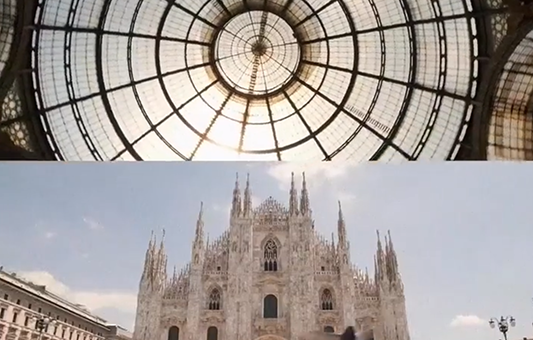
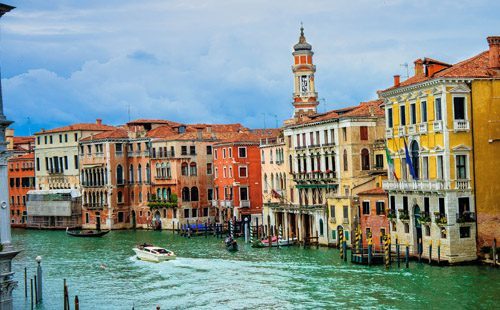
Milan gives you a modern city, Europe’s fashion capital and the crews to match: advertising and fashion films, photo production for international brands, art buyers and agency producers who need a studio, a stylist and a location in the same day. Lake Como’s villas have hosted everything from Casino Royale to House of Gucci. Venice is the most cinematic city in Europe and the most regulated, with boat logistics for every move. Turin has a working film commission tradition and the Alps an hour away; the Dolomites and the Aosta Valley cover alpine locations in every season; Cinque Terre and the Ligurian coast give a Mediterranean look without the southern travel.
Filming locations in the south: Rome, the Amalfi Coast and Sicily
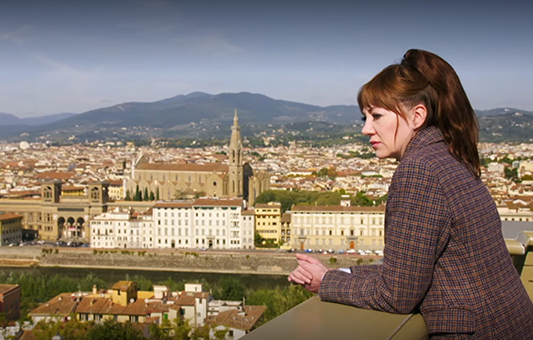
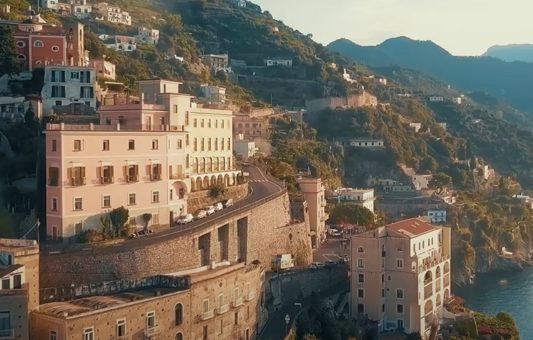
Rome is the reason most feature films come to Italy: the Colosseum and the Forum, baroque piazzas, the Tiber, the EUR district for modernist looks, and Cinecittà, the largest studio complex in Europe, twenty minutes from the centre. The coast south of Naples and Capri provide the postcard: cliffside villages, terraces and turquoise water that suit commercials, features and travel productions alike. Puglia and Matera give period and biblical looks; Naples gives grit and colour; Sicily, from Taormina to Palermo, has become the go-to backdrop for prestige television since The White Lotus. Tuscany, with Florence, Siena and the villa country between them, sits between the two worlds and works for both.
Film production companies in Italy: how the market is organised
Italy’s film production companies cluster by city and by genre, which matters when you choose a production partner. Rome is home to the feature-film production companies, the broadcasters and Cinecittà, so film production services for features, TV series and documentary are strongest there. Milan is where the video production companies serving advertising, fashion and corporate video sit, alongside the photo production companies that shoot campaigns for international brands. Turin, Bologna, Bari, Palermo and Cagliari have smaller production companies that grew up around their regional film commissions, and each of Italy’s twenty regions runs a film commission that promotes its locations, keeps a crew database and, in several cases, manages a regional film fund.
International production companies rarely set up an Italian entity for one project. The usual model is a production service agreement with an Italian production company: the local company hires the crew, signs the location permissions, rents the equipment, claims the tax credit and invoices the foreign producer, who keeps the creative. That is the film production service NEEDaFIXER provides across Italy, with one production team for a project that moves between Milan, Venice, Rome and Sicily instead of a different local production company in each region. For video production services on smaller projects – corporate video, event coverage, a two-day branded content shoot – the same structure applies at a smaller scale.
Italy also has a busy festival and market calendar that keeps the production community close to international producers: the Venice Film Festival, the Rome Film Festival, the Turin Film Festival and the industry markets attached to them are where co-productions are financed and where the film commissions meet foreign production companies. If your project is a co-production rather than a service job, we introduce you to Italian producers with completed projects in your genre.
What is Italy’s film tax credit and how does it work?
Italy runs one of Europe’s most generous incentive schemes. International productions can claim a film tax credit worth 40% of eligible spend in Italy, a substantial uplift on the 25% rate that first attracted filmmakers when the credit was introduced in 2008. Eligible Italian expenditure can account for up to 75% of the total production budget, and a share of qualified spend incurred elsewhere in the EU can be treated as Italian spend for tax credit purposes. The credit is administered by the Ministry of Culture and is claimed by the Italian executive producer, so a foreign production needs an Italian production service company on the application; there is a cap per company per year rather than a minimum spend threshold. Many regions add their own film funds and rebates on top of the national tax credit.
In practice this is how it works for a foreign production: we register the project, track every eligible expense from the first Italian invoice, file the application with the ministry and pass the credit back to you under the production service agreement. Feature films, TV series, documentary and animation qualify; commercials and advertising do not, although several regional film commissions run smaller funds for those.
Last verified: July 2026, against the Ministry of Culture’s published terms. Rates and caps change; confirm before budgeting.
Crew, equipment rental and studios for film production in Italy
Italy has one of the deepest crew pools in Europe. Rome supplies feature-film departments – camera operators, focus pullers, assistant directors, gaffers, grips, sound recordists, location managers – and Milan supplies advertising and fashion crews used to international brands and agency production. Most heads of department speak English; we add bilingual producers so crew coordination and clear communication never depend on the client’s Italian.
Equipment rental is straightforward: full camera, lighting, grip and sound packages from rental houses in Rome and Milan, with smaller inventories in Turin, Florence, Naples and Palermo. Imported equipment travels on an ATA carnet, which we arrange. Cinecittà offers sound stages, backlots and workshops for large sets; Milan and Rome have studios for fashion and stills. Post production – editing, color grading, sound design, VFX and delivery – is available in Rome and Milan, and many international productions finish part of the process in Italy to increase eligible spend for the tax credit.
Location scouting and location management in Italy
Location scouting is where every Italian project starts: our location managers hold a library of villas, palazzi, farms, factories, coastlines and streets with the owner, the permit route and the fee for each, and a scouting trip with photographs and access notes usually takes a week. On the shoot the same location manager handles releases, neighbours, parking and the comune, so the director and the producers only deal with the location itself.
Union agreements govern working hours and overtime for Italian crews; we budget by the local contract rather than a flat day rate, which avoids the surprises that catch foreign producers on their first Italian project.
Film production services in Italy for commercials, fashion and branded content
Not every project is a feature film. Most of the film production services we deliver in Italy are for commercials, fashion campaigns, branded content and photo production for international brands, agencies and video production companies from the UK, the US, Germany and France. Milan is the base for fashion films and luxury advertising; the Sorrento peninsula, Lake Como, Tuscany and Puglia are the recurring backdrops for automotive, hospitality and lifestyle campaigns; Rome and Venice carry the heritage and luxury hotel looks.
For agencies the service is the same as for a feature but faster: a production manager who turns a treatment into a schedule and a budget within days, location scouting with photos and permit notes, casting and stylists through Milan’s fashion network, and a crew that has shot for international brands before. We also run music videos, documentary units for broadcasters, corporate video, event coverage and live streaming, with the same production management and the same insurance behind them.
Photo production and stills campaigns in Italy
Italy is a photography country as much as a film country. Fashion campaigns, luxury and automotive photography, hospitality and travel stills all use the same locations as the film shoots, and our photo production services run alongside the video production: location scouting for photography, studios in Milan and Rome, permits for stills at heritage sites (the Soprintendenza treats a photography crew with lights and stands exactly like a film crew), casting, styling and art buying support for agencies that need a local production partner rather than a directory of photographers. Art buying teams and agency producers get a single project contact in Italy who handles the photography permit, the location fee, the crew and the studio in one budget.
A typical photo production for an international brand runs two to five days across northern Italy or the south: a Milan studio day, a location day on Lake Como or in the Tuscan villa country, and a coastal day in Liguria or on the Amalfi coast. Because photography and film crews overlap, brands increasingly shoot the campaign film and the stills on the same project with the same production team, which halves the location and permit cost and gives the agency high quality video content and photography from one Italian production. Completed projects in this category range from single-day product shoots to month-long fashion campaigns, and the perfect backdrop is usually already in our location library.
International productions and Italy film locations on screen
Italy has been a backdrop for landmark cinema since the studio era, and the locations are still available to today’s international productions. Federico Fellini’s La Dolce Vita (1960) immortalised the Trevi Fountain; Roman Holiday (1953) put Audrey Hepburn on the Spanish Steps. The Talented Mr. Ripley (1999) used Ischia and Procida for its fictional Mongibello, and Netflix’s Ripley (2024) returned to Atrani on the Amalfi Coast, Naples, Rome, Palermo and Venice. James Bond has sailed the Grand Canal in Casino Royale (2006), raced through Siena and Lake Garda in Quantum of Solace (2008) and through Rome in Spectre (2015); Mission: Impossible – Dead Reckoning (2023) closed streets in Rome and Venice. Call Me by Your Name (2017) was shot around Crema in Lombardy, House of Gucci (2021) at Villa Balbiano on Lake Como, in Rome and across Milan, and HBO’s The White Lotus season two (2022) at the San Domenico Palace in Taormina. Sicily’s villages of Savoca and Forza d’Agrò still draw crews for The Godfather (1972). Venice, Rome and Turin also host film festivals every year, which keeps the local film industry, the studios and the film commissions in constant contact with international producers.
When is the best time to film in Italy?
April to June and September to October give the best light, mild weather and workable crowds in the cities and on the coast. July and August are hot, and around Ferragosto (15 August) much of the country closes – suppliers, offices and some permit desks included. Winter is ideal for the Alps and for empty heritage sites in the cities, and Venice in fog or Rome in winter light are looks in their own right. Fashion weeks in Milan (February and September) and the Venice Film Festival (late August to early September) fill hotels and crews, so book around them.
Film and video production projects we have serviced in Italy

Filming in Italy with NEEDaFIXER
NEEDaFIXER delivers film production services and video production services in Italy for production companies, broadcasters, agencies and international brands that need a reliable partner on the ground rather than a directory of contacts; we are not a jobs board or a talent agency. The entire team – line producers, production managers, location managers, fixers and drivers – works to one production schedule, one budget and one point of contact, and creative problem solving on the day is what we are hired for.
What our Italian production team does for you
- Filming permits: municipal, heritage, drone filming authorisations, location releases
- Crew: directors of photography, camera operators, assistant directors, sound, gaffers, grips, art directors, a production manager, a line producer and an executive producer for the tax credit
- Equipment rental: camera, lighting, grip and sound equipment from Rome and Milan; carnets for imported kit
- Location scouting and location management across northern Italy and the south, with location permissions filed under our name
- Production management: budgets, schedules, travel, accommodation, transport, insurance and project management for multi-region shoots
- Tax credit applications with the Ministry of Culture and regional film commissions
- Post production: editing, color grading, sound design, VFX and delivery
Frequently Asked Questions
Can you film in public in Italy?
Small handheld shoots in public are generally tolerated, but anything with a tripod, lights, a crew or a vehicle needs an occupation-of-public-land permit from the local comune, and road closures need police coordination. Heritage sites and monuments need Ministry of Culture permission on top. NEEDaFIXER files all of these as the Italian production service company of record.
Is it expensive to film in Italy?
Italy is mid-priced for Western Europe: crews and equipment cost less than London or Paris, hotels in Milan and Venice cost more than the south, and heritage locations carry fees. The 40% tax credit brings the net cost of a feature or series well below the gross. We return a line-item budget with the credit shown net before you commit.
What famous films were filmed in Italy?
La Dolce Vita and Roman Holiday in Rome, The Talented Mr. Ripley and Ripley on the Amalfi Coast and Ischia, Casino Royale and Mission: Impossible – Dead Reckoning in Venice and Rome, Call Me by Your Name in Lombardy, House of Gucci on Lake Como, The White Lotus in Taormina and The Godfather in Savoca, Sicily.
Do I need a visa or work permit to film in Italy?
EU citizens need neither. Crew from the UK, the US and most other countries can enter visa-free for short stays under Schengen rules, but check the current requirements with the Italian consulate before travel; we advise on this during prep and handle the paperwork for longer shoots.
Can I hire equipment in Italy or should I bring my own?
Hire locally where you can: Rome and Milan rental houses carry current camera, lighting, grip and audio packages, and local hire counts as eligible Italian spend for the tax credit. Specialist kit can be imported on an ATA carnet, which we arrange.
Testimonials
’NEEDaFIXER team provide a professional and efficient service and they react very well to last minute production requests and changes. We have used them on numerous location shoots and we have always felt a high degree of trust and reliability. I wouldn’t hesitate in working with them on future productions.’
–
Karen Knowles
Producer / RICOCHET
Enquire About Your Production in Italy
For production companies, broadcasters, brands and agencies planning a shoot in Italy.